
Articles
-
Price always matter. But some customers define price as value. They are willing to pay more to get more. Other customers want the lowest possible price. And the lowest possible price depends on what is the minimum they will accept. One term for this kind of evaluation is low price, technically acceptable (LPTA). In an LPTA evaluation, no matter what you say or do that's better than the minimum acceptable, the customer will not care. It looks like all the customer cares about is the price. And wh
- 0 comments
- 183 views
-
 Not everyone can write. And people who write well in other areas may not write great proposal copy. The law of averages means that not even every proposal specialist is exceptional. So how do you win using people who are not great proposals writers? First, you should start thinking in terms of contributions instead of sections. Just as there are many ingredients that go into a winning proposal, there can be many contributors. And a contribution to the proposal doesn’t necessarily have to in
- 0 comments
- 4,471 views
-
 Most people write their proposals by doing things that add up to nothing. Instead of thinking through what it will take to win, they just start piling on positive-sounding attributes. They might even be legitimately positive, but if they don’t fit the way the customer makes their decision, they won’t add up to much at all. Probably nothing. The problem is that a collection of positive attributes, even if the attributes are relevant, is not what a customer really wants. They want results.
- 0 comments
- 7,503 views
-
 You can't follow the steps to create a great proposal, because the steps are different every time. They aren't even steps. At best we talk about phases. But even those change, overlap, or get redefined every time. That's why most companies really just have a way of doing their proposals that isn't legitimately a process. If a process requires a certain person to run it, it's not really a process. Writing a winning proposal is really based on a flow of information, from lead to submission.
- 0 comments
- 3,670 views
-
 If your proposal is about giving the customer what they asked for, it's just not... special. It might be a little better, maybe, but that’s not special. That’s just being the same only a little bit more. You may have claimed to be special and probably believe it, but who cares about that noise? What the customer sees is marginal. Meh. Your proposal is not special, because you haven’t proposed giving the customer anything that’s special. You haven’t proposed anything they can only get if the
- 0 comments
- 2,901 views
-
 Some people talk a good game, are full of charisma, and can be very persuasive. But their proposal win rates are often ordinary because they think all they need to do is sit down at a keyboard and hook the customer with the same pitch they'd use in person. Unfortunately. winning in writing has nothing to do with talking a good game. The problem isn't the pitch. The problem is that people process written words differently than they do spoken words. While a conversational style in proposal
- 0 comments
- 5,697 views
-
 In business development, companies often have one person managing the customer relationship. All relationships are personal, so companies tend not to think about making them process driven. But this causes problems in business development because over the life of the pursuit, many people will get involved. Relationship marketing is not about having relationships. It’s about winning because of your relationships. For relationships to lead to business, they must be productive. The goal of the
- 0 comments
- 4,152 views
-
 When you sit down to write a proposal, you start asking questions so that you know what to write. Inevitably you ask questions that can’t be answered, but that could have been answered had they occurred to you earlier. At the tail end of the process, proposals tell you what you should have been doing all along. When you sit down and write the proposal, you describe your approaches and what you will do if you are selected. This is where one little writer, often at a junior level, can change
- 0 comments
- 4,911 views
-
 Sometimes people think they are making more of a contribution by writing theme statements than they really are… Sometimes it goes a bit like this: We wrote some themes. They make us sound really good. What else do you want from us? It's not our fault they don't match what's in the RFP. You want a theme for everything in the outline? But that's so... artificial. And the outline, like the RFP, is redundant, has gaps, and isn't built around our "story." The reason our themes are s
- 0 comments
- 1,900 views
-
 Two days before the proposal is due, just as final production is about to begin, the proposal hero looks at the document and is aghast. “It’s all wrong!” he declares. Pandemonium ensues. Papers fly. And the re-writing begins. For the next 48 hours, nobody sleeps. They are fed pizza intravenously. With no time for further review, they hand things in to final production an hour before it’s due. With less than a minute to go they click the button to submit the proposal. By some miracle, nothing goe
- 0 comments
- 2,012 views
-
 If every one of your proposals does not pass its reviews, then you are conducting your reviews the wrong way. It's a sign that you are figuring out what your proposals should be after they are written. It's a sign that you are waiting until after something is broken to do something about it. The way most proposal reviews are conducted is like putting a blindfold on someone, asking them to hit a target, and then finding fault with them when they miss. They are somehow just supposed to know
- 0 comments
- 39,508 views
-
 Within a company, the staff that do business development and the operational business units that serve your customers often don’t get along. It’s not surprising, given that they’ve been set up to fail and organized to be in direct opposition to each other. It’s strange because they should have so much in common. If business development and proposal success require relationship marketing, then you would expect both to want to work together to grow the customer relationship. Business developm
- 0 comments
- 5,294 views
-
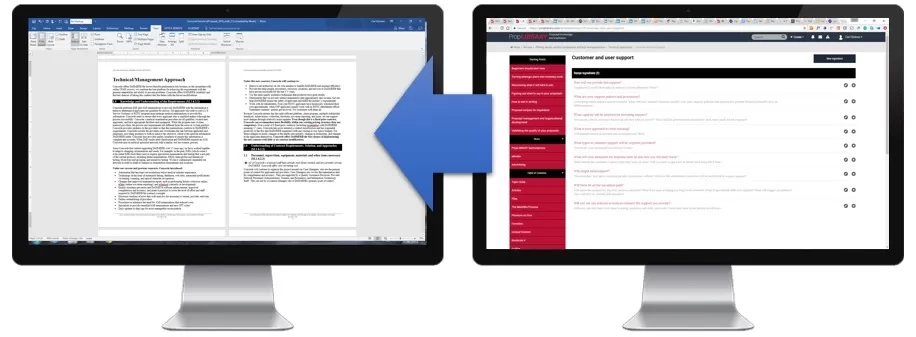 When people think about tools for proposals, they usually make the mistake of thinking about automation. What they should be thinking about instead is performance. When you think of automation, you think of reducing effort and cost. Let the computer do it for you. Go right ahead — if you want to produce proposals that are easy to beat. But when you think of supporting performance, other things that become important. Like the fact that many people who get involved in proposals are inex
- 0 comments
- 3,185 views
-
 Some companies are opportunistic and bid every lead they find. They think business development consists of looking for leads in databases and bidding everything they can. These companies aren’t selective, waste resources, have little or no process, and try to cram everything they can into their proposals at the last minute. They sometimes get just enough business to reinforce their bad habits. Most opportunistic companies are in wide niches where they don’t have to worry about whether enoug
- 0 comments
- 6,864 views
-
 You and I don't get to decide whether a proposal is good. Only the customer gets to decide that. Only the customer can decide which proposal is good enough to accept. You might have what you think is a great offering, on paper. You might have what you think is a great plan, on paper. But if the customer chooses another alternative, that is what will get done, built, or delivered. And your proposal will remain a concept. On paper. Forgotten. No matter how good you think your propo
- 0 comments
- 4,009 views
-
 Where you start depends on who you are, or more accurately the role you play. People look at proposals differently depending on their role, and their contribution to winning is different as well. If you don’t start at the right place for the role you play, you risk leaving a gap that will decrease your company’s ability to achieve its full potential. Let’s take a look so you can see how this plays out… If you are the top dog, it is vital that you create a culture that treats decision
- 0 comments
- 4,365 views
-
 How do you get good at doing proposals? Where do you start? What should you focus on? You won’t get good at proposals simply by doing a lot of them. You might get more efficient, but being more efficient at submitting ordinary proposals is not the goal. Proposals are an investment that are expected to achieve a return. To maximize your investment and improve the win rate that has such a huge impact on your return, we’ve identified six simple, specific, and highly leveraged things to focus o
- 0 comments
- 3,820 views
-
 You need more than an RFP or the customer’s specifications to write a winning proposal. Just think about your last proposal, and all the questions you had when you started writing. Then think about all the questions the customer might have about a potential vendor. You should easily be able to think of more questions than the RFP requirements will answer. The importance of knowing what you don't know Most people focus on objective, tangible things, like whether you’ve done certain thing
- 0 comments
- 1,121 views
-
 Normally I think that even looking at a past proposal is asking for trouble. You don’t need that kind of pain. You made mistakes you don’t even know about. A lot of them. In fact, based on what we see when we review proposals for companies, there were a lot of problems in them. Even the proposals that won. Why open those wounds? Two words: win rate. A small increase in win rate is worth a large investment. Do the math. But what should you do to improve your win rate? Looking at yo
- 0 comments
- 2,647 views
-
 Some things are vital for proposal reviews to be consistently effective, and other things depend on your circumstances. People mix them up all the time because they're focused on their circumstances. They're so focused on how they’re going to get the proposal done that they overlook that what they review is more important than how they review it. Changing your focus to what really matters means changing your whole approach. You can let your circumstances and judgment determine: How m
- 0 comments
- 2,874 views

