
Articles
-
 A Capture Manager is a dedicated person assigned to winning a business pursuit, and provides the leadership, coordination, resource allocation, strategy, and management needed to prepare the winning bid. A Business Development Manager is responsible for opening new territories and markets and generating a whole portfolio of leads. They feed the open end of the pipeline with leads and qualify them. Capture Managers are most often used for large complex pursuits with long sales cycles, w
- 0 comments
- 12,834 views
-
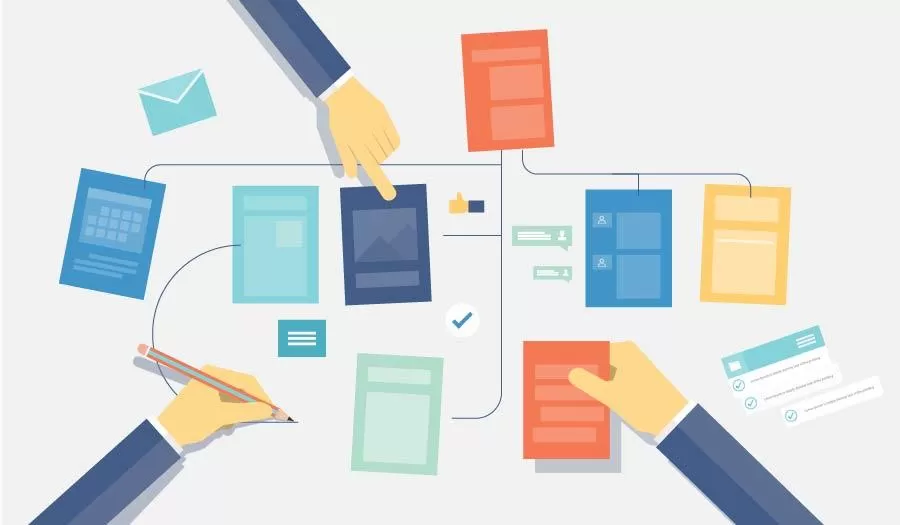 Typically, the proposal process involves creating a plan for what to write, and then writing it. But what sits in between your Proposal Content Plan and the draft proposal? See also: The MustWin Process The MustWin Performance Support Tool Proposal Content Planning Proposal Quality Validation PropLIBRARY subscription information The term “proposal prototyping” was introduced to us by Carrie Ratcliff. After we showed her what the Mu
- 0 comments
- 11,287 views
-
 All the cool cats know that the best proposals tell a story. But no one can really explain how to do that, let alone actually consistently achieve it when working with a group of proposal contributors who aren't specialists. Usually they just emphasize that your proposal should have a message. But what message and how do you construct it and put it in writing? So the next thing they try is proposal themes. But while everyone says they know what themes are, everyone defines them differently. And
- 0 comments
- 10,085 views
-
 After losing a proposal most companies request a debrief from their customer and hold a lessons learned meeting. Usually in the debrief companies either fail to ask the right questions or don’t get answers, and in the lessons learned meeting they focus on the wrong things. Were your estimates off? Why? Did you misunderstand the scope of what they wanted? Did you select, design, or recommend the wrong offering? Did the winner offer something the customer thought was b
- 0 comments
- 12,805 views
-
 Very few companies have effective bid/no bid decision making. They muddle through. When they do implement a bid/no bid process, it is usually flawed. The desires of participants carry more weight than any other criteria. Most find it extremely difficult to not take a chance at winning something. Some even have bid/no bid decision meetings, but they don't actually change anything. Below are several ways that companies approach the bid/no bid process. Leave it up to business development.
- 0 comments
- 19,549 views
-
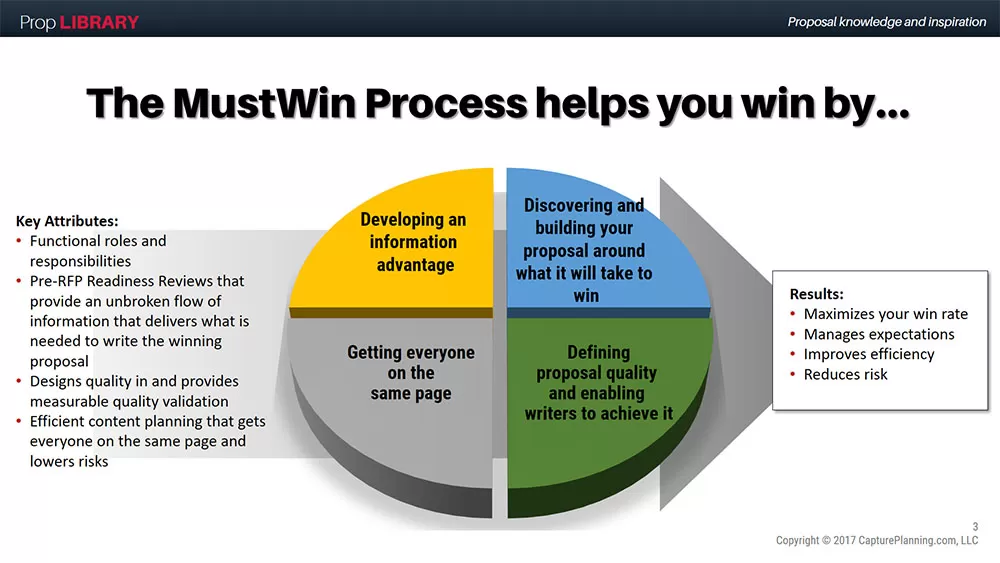 This article focuses on winning U.S. Federal Government contracts. Many state and local governments also follow a process that is similar. Most government contractors aren’t that good at winning contracts. A 30% win rate is considered good and that means losing two out of three proposals. I've talked to companies that had a 7% win rate. This meant they had to submit over nine proposals to win just one. It's like they aren't even trying to get good at winning. If your approach to winnin
- 0 comments
- 9,276 views
-
 An ordinary proposal is a loser. Good is not good enough. Better than most is not good enough. Only the best proposal will win. Anyone can win occasionally. It’s winning consistently that’s hard. If your win rate is in the 20-30% range, you’re probably good at producing proposals. But they are not great. You usually lose. Keep in mind that if your win rate for your recompetes is much higher, then it’s also much lower for your attempts at gaining new business. For most companies, i
- 0 comments
- 12,186 views
-
 Waiting for a contract before you start developing your customer relationships is doing business development backwards. There are more ways to get ahead of the RFP and start relationship marketing than most people realize. This is a critical first step towards being able to influence the RFP. A lot of people focus on customer intimacy as something that improves your chances of winning. Plus, it sounds cool. No company is going to say they’re not interested in customer intimacy. It’s prett
- 0 comments
- 11,965 views
-
 When people have multiple things competing for their time, they often turn to templates and re-use libraries as a way to lighten the proposal workload. The problem is that they lighten the workload by reducing your win rate. And if you’re making smart bid decisions, the lost revenue will always be greater than the investment in doing proposals that are customized around your win strategies. People try to convince themselves that if they design their templates just right, they can beat the odds.
- 0 comments
- 13,892 views
-
 It’s not that companies don’t try to prepare before the RFP is released, although that is sometimes the case. The real problem is that when they do try, most of their effort is wasted. They have some time, they have some budget and somehow they start the proposal with nothing of substance to show for it. The reason you end up at RFP release unprepared even though you had an early start The primary reason is that they haven’t figured out how to stage what they know in a way that impacts th
- 0 comments
- 6,381 views
-
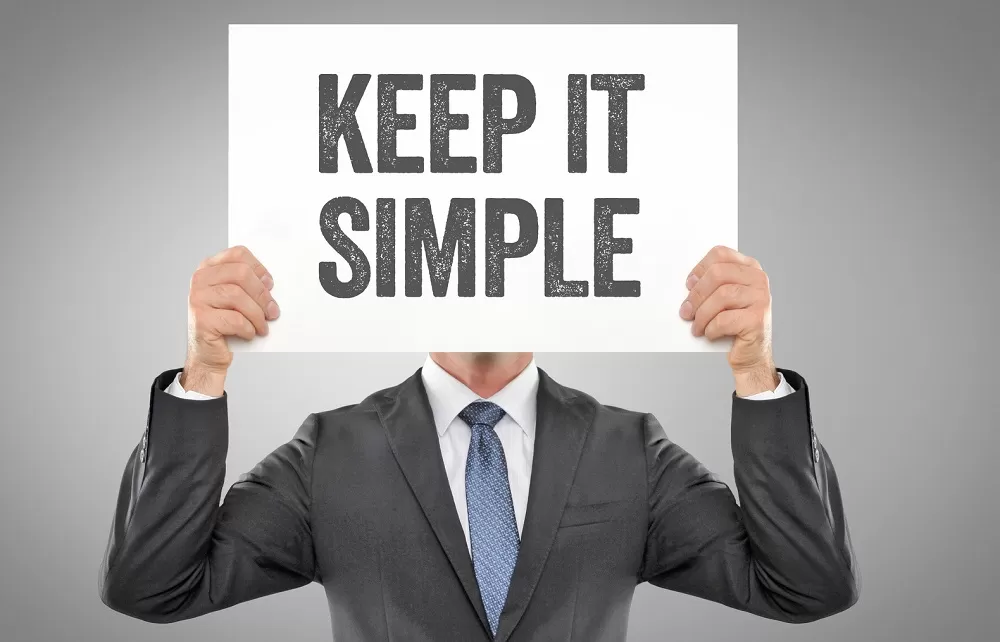 Just because you really want to win a proposal, does not mean that you need to go about it in a complicated way. There may be a lot to do and a lot to think about, but that doesn't necessarily mean you need to have a complicated proposal process. Unfortunately, figuring out how to best simplify preparing proposals may not be obvious. In an effort to simplify their proposal efforts, people often do things that hurt their chances of winning. It turns out that the complexity of a proposal eff
- 0 comments
- 13,109 views
-
 When you have been blessed get stuck with a proposal assignment or decide to pursue a bid where you’ll be doing most or all of the work yourself, it’s natural to look for ways to make it easier. Here are seven things you need to do to successfully complete your proposal assignment and what you need to make them happen. After that, we explain our approach to make doing those things easier so that you can quickly complete your assignment and deliver a winning proposal. To successfully complet
- 0 comments
- 11,061 views
-
 You can’t write a great proposal unless you have a great offering. Trying to write about something in a great way when you haven’t figured out what that something even is, is just a recipe for failure. You need to start the writing already knowing what your great offering is going to be. In fact, making up a great offering by writing about it is a great way to ensure that you end up with a poor offering that is poorly explained. That’s a major way that companies end up with a low win rate, and
- 0 comments
- 8,174 views
-
 It's not enough to track your leads. You need to know what they add up to. You need to know how many resources you'll need to win the pursuit. And at each step along the way, you'll drop some leads. Either they fail to qualify, the customer cancels them, or they all land at the same time and you can't pursue them all. Pipeline analysis blends lead tracking with analytics. A pipeline model is a spreadsheet that shows your leads over time, status, source, and other attributes. The formulas contain
- 0 comments
- 11,050 views
-
 If you don’t put a ton of thought into your proposal strategies or if you leave it until the end, after you’ve got the proposal written as if it’s some kind of icing on the cake, then you need to understand why your good proposal is going to lose. To end up with a great proposal instead of a merely good one, you need the right strategies. Before you can develop the right strategies, you’ll need to have developed an information advantage. And once you have your strategies, you’ll need to art
- 0 comments
- 9,638 views
-
 Winning as an organization isn't just about business development. Or proposals. Or capture. It takes a village to develop business. When an organization decides it's time to get good at winning new contracts, it often focuses on developing its proposal process. This is a good thing. But it is also not enough. It is merely a starting point. Winning as an organization requires more than just a process. There are staff issues, leadership issues, culture, management practices, strategies, colla
- 0 comments
- 9,743 views
-
 Your good proposal is going to lose. You can’t charm your way into a sale in writing because selling in writing is different than selling in person. In fact, winning in writing is more like cooking than speaking. Don't fear proposal writing just because you are not a writer. It helps to have all the ingredients. You have to have done your pre-proposal homework and be prepared with an information advantage. But you don't need to feel overwhelmed. You won't write a great proposal by usi
- 0 comments
- 21,014 views
-
 Most training for proposal writers focuses on the mechanics of identifying what to write, and provides very little help for how to write it. I see a lot of well-trained proposal teams struggle with how to address things when they have a problem. I’ve also watched a lot of technical staff and proposal writers struggle with how to say things in writing. They may know that benefits are more important than features or they may know that writing proposals from the customer’s perspective is bette
- 0 comments
- 9,874 views
-
 To write a proposal, you must overcome eight challenges. You can’t avoid them. You can’t skip any of them. You just have to face them. To help out, we’ve included links to many other articles we’ve written that are relevant to the individual challenges: Complying with the RFP. First you have to read it and understand it. Then you have to cross-reference all the requirements across the various sections. Even if your assignment is for a single section, there may be requirements in other se
- 0 comments
- 26,995 views
-
 The difference between marketing, business development, sales, and capture has nothing to do with titles. The difference is purely functional and it matters. People misuse the labels all the time because there is a lot of overlap and they prefer one title over the other. But you need some of each, even if you are short staffed and the titles people have don’t match. The goal of marketing is to attract customers so that you can sell to them. There are many approaches to attracting custo
- 0 comments
- 5,866 views
