
Articles
-
Content Plans are flexible. You can use them on simple, quick turnaround proposals or large complicated proposals. You can use them on proposals with strong centralized management and planning, and you can use them on decentralized highly collaborative proposals. In addition to figuring out what to say in your proposal, you can use Content Plans to provide training, guidance, communication, and even issue tracking. It helps to focus on the fundamentals. At its core, a Content Plan does tw
 Guest
Guest- 0 comments
- 288 views
-
The following links are from the Introduction to Content Planning course. They are here in case you need a quick refresher before jumping into the exercises: In the exercises, you'll be stepping through all 8 iterations for creating a Proposal Content Plan. Here are a list of those iterations so you know what to expect. For a reminder about what a Proposal Content Plan looks like and how it works, here is a presentation from the introduction course to help you visualize it. H
- 0 comments
- 592 views
-
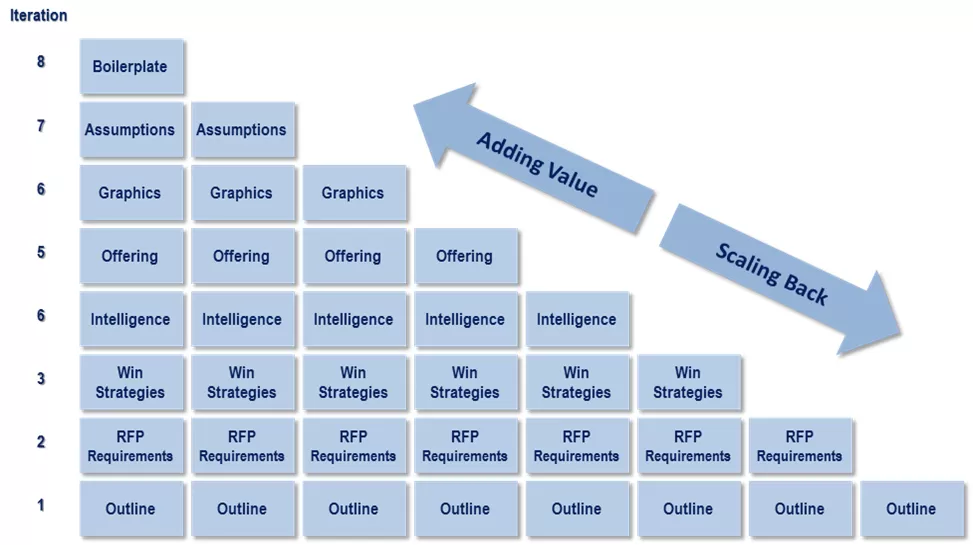 You add the most value when you do all the iterations, but if you don’t have the time you can scale all the way back to even just one iteration. You decide how to best balance schedule and resources against planning and performance. But if you need to scale back the amount of planning, this chart shows how to do it by skipping the things that add the least amount of value. Performing all of the iterations will produce a very comprehensive content plan. But for a large proposal, this
- 0 comments
- 2,856 views
-
Validating your Content Plan before you start to write: Prevents re-writing and editing cycles. Enables you to confirm that the approaches are correct before you start writing. Provides you with a reliable baseline to measure the draft text against. Validating the Content Plan is more important than validating the draft text. It is important to confirm that the Content Plan contains everything that it should, and that the instruct
- 0 comments
- 245 views
-
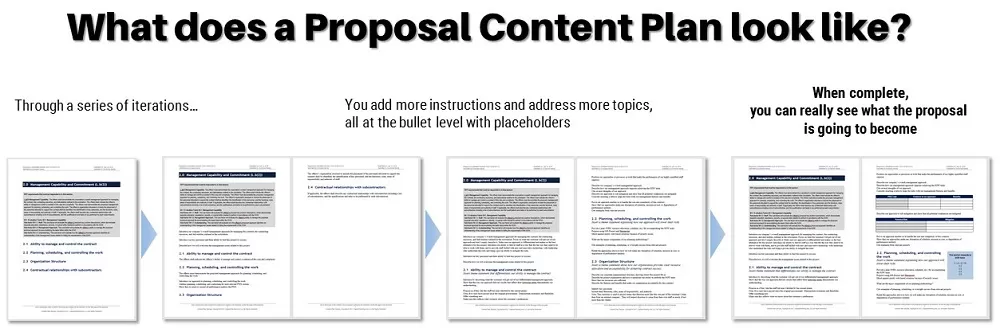 Proposal Content Planning is a methodology that is part of the CapturePlanning.com MustWin Process. The full methodology is part of what comes with a PropLIBRARY Subscription. Here is an introduction to Proposal Content Planning. When you are just getting started with preparing Content Plans for your proposals, you can put anything in them that’s helpful. You don’t need to get hung up on the wording. Anything you put in them will be better than nothing. As your experience and skills im
- 0 comments
- 4,564 views
-
The PropLIBRARY Course System uses just a handful of content types for all of the course content: Articles. Use this for text with graphics and links. It can used for a textbook topic or it can be a description and a link. We use it for repurposing the content from the PropLIBRARY website. The target for this content type is 500-1500 words, but it will support much longer lengths. Formatting is limited to what the web-based editor supports. Tables can be created, but are a pain. Fi
- 0 comments
- 23 views
-
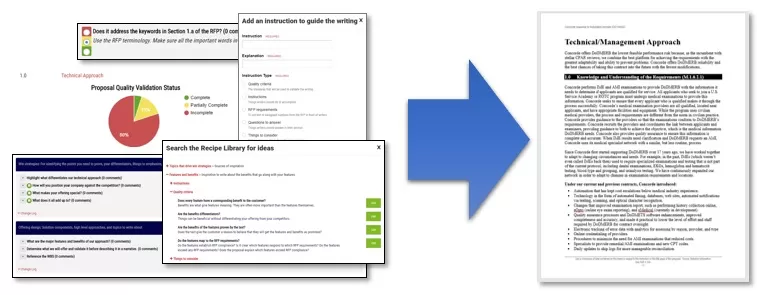 This is a what a few days in the life of a proposal team can be like if instead of working with just an RFP and Microsoft Word, they use a performance support system. In her book, Electronic Performance Support Systems, Gloria Gery defined performance support systems as: An integrated electronic environment that is available to and easily accessible by each employee and is structured to provide immediate, individualized on-line access to the full range of information, software, guidan
- 0 comments
- 2,170 views
-
You can accelerate your proposal quality validation efforts by identifying the quality criteria you want to apply to all proposals ahead of time. You can even turn them into checklists. If you provide an opportunity to create additional quality criteria that are specific to the pursuit, you can accelerate without watering down your criteria. This requires thinking through your standard quality criteria before you start your proposal. If you start a proposal without already having prepared y
- 0 comments
- 323 views
-
To facilitate your Proposal Quality Validation planning, we have prepared a set of sample quality criteria, allocated to key proposal milestones. Make sure you customize this list to reflect the specifics of the opportunity, your type of business, and the market. 1. Pre-RFP If you implement Readiness Reviews, then these items have already been validated. 1.1 The opportunity is worth pursuing 1.2 We know what evaluation criteria to anticipate 1.3 We have collected th
Guest
- 0 comments
- 645 views
-
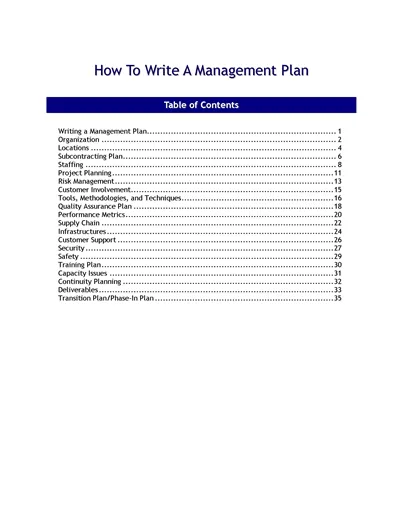 This guide is organized like a cookbook, providing over 180 items divided into 20 topics. It will help you answer your customer's questions regarding how the work will be done, who will do it, what resources will be required, how to mitigate the risks, and what you will do to ensure quality. It will help you prove to your customer that you can successfully manage the project and deserve to win the contract.
- 0 comments
- 891 views
-
It is so much easier to talk about your experience than to plan approaches or develop differentiators. Don't fall into the trap of thinking that the value of your experience answers all requirements. Your experience has no value and does not matter. Unless you articulate that value and bring meaning to it. The following example is loosely based on proposal content that was actually submitted to the customer, with some changes to hide the identity of the company that submitted it. The compan
- 0 comments
- 209 views
-
Describing your own company is a mistake, even when the RFP uses the word “describe.” The customer doesn’t care about your company, they care about what they are going to get and whether you can deliver as promised. They ask for the description because they want to assess that ability. The following example is loosely based on proposal content that was actually submitted to the customer, with some changes to hide the identity of the company that submitted it. The company was not one of our
- 0 comments
- 220 views
-
Describing your own company is a mistake, even when the RFP uses the word “describe.” The customer doesn’t care about your company, they care about what they are going to get and whether you can deliver as promised. They ask for the description because they want to assess that ability. The following example is loosely based on proposal content that was actually submitted to the customer, with some changes to hide the identity of the company that submitted it. The company was not one of our
- 0 comments
- 323 views
-
 A lot of proposal writing follows common patterns. When we review proposals for companies we see new examples of the mistakes below all the time. If you take a step back from the details, the patterns are quite simple. If you learn to recognize the patterns, you can avoid writing like this: First I’m going to tell you what you need. Then I’m going to say that I’ll provide it. Before example: XYZ agency needs to update its website. Our approach to building websites is based on compli
- 0 comments
- 3,654 views
-
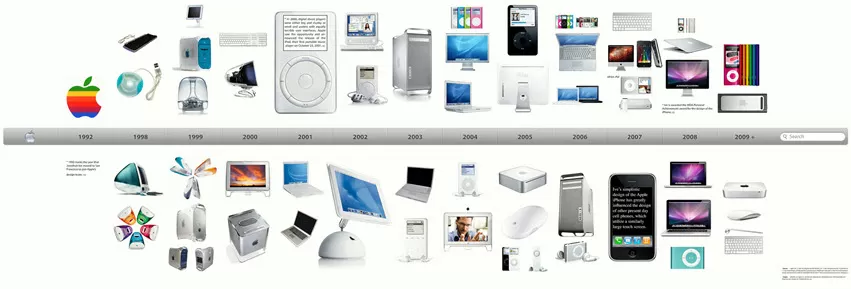 Apple is famous for having a designer lead their product development efforts instead of having an engineer lead them. Apple designers obsess over what will please their customers. In many ways that exactly describes what great proposal writers do. So who designs the offering for a company that offers complex services like engineering? Should it be a subject matter expert? Someone who understands the work? Or should it be a designer, someone who understands what will please the customer?
- 0 comments
- 1,385 views
-
 Separating how you figure out what to offer from writing about it is critical to avoid endless draft cycles that only end when you run out of time and you submit the proposal you have instead of the proposal you want. But you still have the problem of how to design your offering. Designing your offering is an engineering problem. And the engineering approach depends on the nature of what you offer. There is no single engineering methodology that is best for all. But there are some things th
- 0 comments
- 4,825 views
-
 When the RFP forces everyone to bid the exact same thing, the ways people differentiate their bids tend to be intangible. This makes it difficult for the customer to evaluate. How, other than price, do they rank the bids based on intangible differences? How do they justify selecting a winner that costs more when the difference in value can't be quantified? It's difficult, but if your proposal is full of unsubstantiated claims, you don't have a chance. Consider each of the following ways com
- 0 comments
- 6,492 views
-
 Proposal writing like these examples can turn a great proposal into one that is merely ordinary. You might not get fired for sounding just like everyone else, but it's also no way to win your proposals. I see these issues so frequently when I review proposals for companies that they are like clichés. The good news is that the opposite is also true. Learning how not to write like this can turn your good proposals into great proposals. Correcting bad habits like these can help your proposals stand
- 0 comments
- 5,110 views
-
 Win probability is the likelihood that you'll win your pursuit. It would be so nice to be able to predict the probability of winning a bid. It would be really nice to know what percentage your chances are. It would so help with resource allocation and making decisions. But there are just two problems with expressing win probability as a percentage: None of the algorithms that make the attempt to calculate your percentage chance of winning have statistically significant data to base the
- 0 comments
- 2,416 views
-
 read a description of the other RFP sections here. Some may have things that you must respond to, like Section K, where they put the “Certifications and Representations” (where you may have to “Certify” or “Represent” things like whether you are a U.S. firm, a minority firm, that you haven't defaulted on previous contracts, etc.). But the others are part of the legal form or contract boilerplate, and you won’t have to read them the same way you will the Statement of Work and Evaluation Criteria.
- 0 comments
- 5,451 views
