
Articles
-
 This article is another in a series we've written on Doing Proposals The Wrong Way. They describe very powerful, but dangerous, techniques that turn the best practices on their heads. The most powerful proposal writing aligns what you are offering with the customer’s vision. The customer’s vision for themselves is about what they want to become. It tells you how they want to change. If you get their vision wrong, then you could very well be suggesting that they change in a way that is not w
- 0 comments
- 3,670 views
-
 Customers don’t see your company as a whole. They only see what you send them, the people they interact with, any products you install, and the results of your efforts. Before they meet you, they might hear about your reputation, but unless what you do is important enough, or widespread enough, they probably haven’t heard about you at all. When they get a proposal from you, they see what you’ve put in writing. And that’s it. All those unsubstantiated claims that you think are credible, they
- 0 comments
- 3,370 views
-
 The best way to win a proposal is to write about what matters to the customer. But there is another, even more powerful way to win. Unfortunately, it’s dangerous. If you don't get it exactly write, you'll probably lose. If you do, you'll probably win. While writing about what matters to the customer is what everyone aspires to, it is at best the second most powerful form of proposal writing. The most powerful form is writing about what should matter to the customer. Writing about what shoul
- 0 comments
- 4,041 views
-
 We’ve noticed a trend in proposal debriefs, where the comments are more and more likely to be based on black and white criteria like “did address” or “did not address.” Never mind whether what the proposal said made sense or is qualitatively better than what your competitors have offered. The criteria have been made objective so that the evaluation can’t be questioned. It’s been made black or white, with no protestable shades of gray. When this is the case, the evaluation is performed mecha
- 0 comments
- 5,754 views
-
 Most proposal introduction paragraphs are wasted space. They are written like the writer needed to get warmed up while figuring out what to say. And yet when the customer looks at your proposal, wondering what’s in it for them, it’s the first thing they read. It's the first thing they consider when deciding whether to read further and whether to accept your proposal. An ordinary proposal introduction won't add value or help the customer. They usually include a company's standard way of ta
- 0 comments
- 11,218 views
-
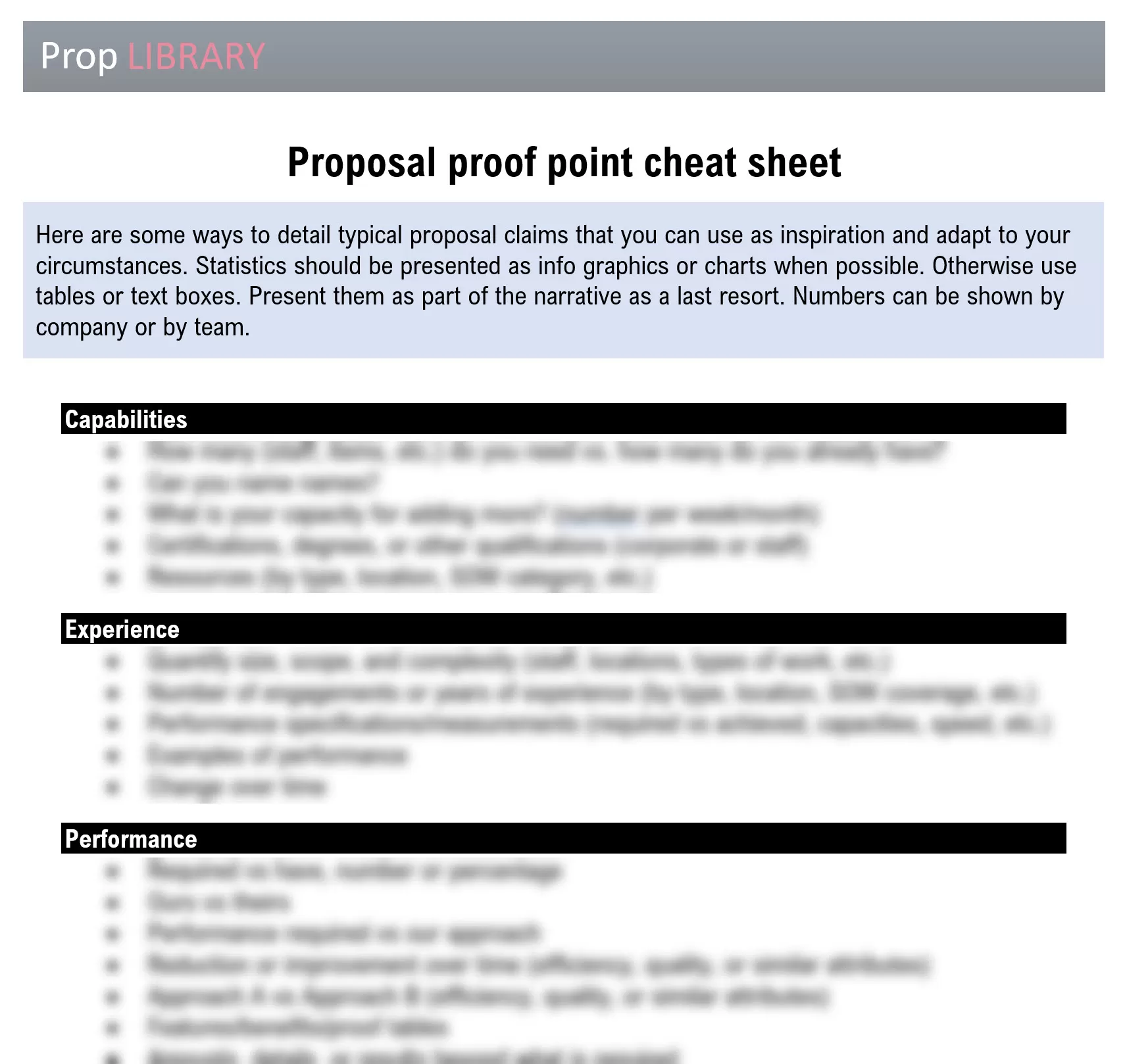 Here are 28 ways to detail typical proposal claims that you can use as inspiration and adapt to your circumstances.
- 0 comments
- 2,120 views
-
 When you do a lot of proposals, it’s easy to find yourself starting with the RFP. After all, you can’t really start proposal writing until you know what’s in the RFP. You can’t create the outline. You don’t know what the schedule is. You don’t know how many people you need to help. Etc. Unfortunately, I've seen the notion that the proposal starts with an RFP actually destroy entire companies. It tricks them into building their business around looking for RFPs they can respond to. Since thou
- 0 comments
- 5,906 views
-
Ghosting the competition is an advanced proposal skill. It involves explaining why the customer should not select your competitors. Here are some examples of the wording you can use to do that covering many proposal sections. Click here for an explanation of techniques for ghosting the competition. Use care when ghosting the competition and note how important it is to offer a differentiated solution that shows why the customer should select you before pointing out that it is also a reason w
- 0 comments
- 618 views
-
 Most companies obsess over lead generation, when it's their win rate that ultimately determines their success. If your company lives or dies on its ability to win proposals, then everything depends on your win rate. Very few companies understand it, and even fewer build their companies around it. The ones that do are successful. The ones that don't aren't really in business, they are just gambling. Once you realize the importance of your win rate on your ROI, then the fun really starts. Tha
- 0 comments
- 6,902 views
-
 Carl Dickson of CapturePlanning.com and PropLIBRARY is a frequent public speaker. It's one of his favorite things. Because he runs a web-based empire he doesn't get out enough. He'd love to speak at your event, but can't do them all. You are welcome to ask. Let us know when, where, about the audience, and the topics you think will excite them. You can call us at 1-800-848-1563 or contact him through our site.
- 0 comments
- 2,277 views
-
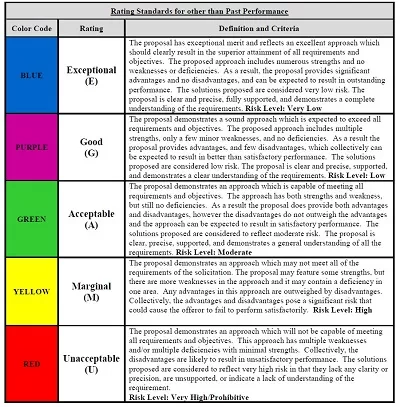 To write a proposal from the customer’s perspective requires not only responding to the RFP, but also understanding how the customer will evaluate your response. How will they read it? Will they read it, or will they simply score it per their evaluation criteria? And if they do score it, what is their process? If the customer has a formal RFP evaluation process, like they do with government proposals, the RFP evaluation criteria can give you clues about their process. Are the evaluation cri
- 0 comments
- 13,247 views
-
 Proposal recipes work best when they reflect the specifics of the way your company does things and its circumstances. They can also help prevent your authors from reinventing the wheel. But you have to be careful when you make them specific that they remain applicable to all your bids. Luckily the question format facilitates this. You can include options that may or may not be applicable by how you phrase the questions. Instead of finding the balance between generic and specific, you can get as
- 0 comments
- 265 views
-
 The goal of a proposal recipe is to accelerate proposal writing and inspire your staff to write better approaches. Proposal recipes suggest topics to write about, instead of providing topics that are already written but in the wrong context. A proposal recipe avoids providing you with a narrative you can recycle. Instead, proposal recipes ask questions about everything that should go into the narrative. When you answer the questions, you not only create the narrative, but what you write is
- 0 comments
- 7,785 views
-
 Templates that recycle text or provide placeholders or form fields will reduce your win rate. The lost sales from a lower win rate far exceed the savings that using content templates or boilerplate might bring. Instead of recycling or automating proposal content, we focus on accelerating figuring out what your strategies should be and how you should position what you will write, and providing inspiration for what to write about. We'd rather make it easier to write a win rate lifting great propos
- 0 comments
- 30,585 views
-
 Use this cheat sheet to help craft better instructions for your proposal writers and provide guidance before they write their proposal sections, instead of trying to fix your proposals after they?ve been written.?
- 0 comments
- 1,357 views
-
 Some companies prepare their proposals like they are trying to ensure people are miserable. Some of them even take it as a point of pride that everyone hates working on proposals. If you make proposals easier, there will be less glory at the finish line. So maybe we’ve got it all wrong and need to avoid all that process-stuff. Instead let’s embrace making sure that everyone has a bad proposal experience. Here’s how: Hand them an outline and tell them to start writing. This makes it alm
- 0 comments
- 1,574 views
-
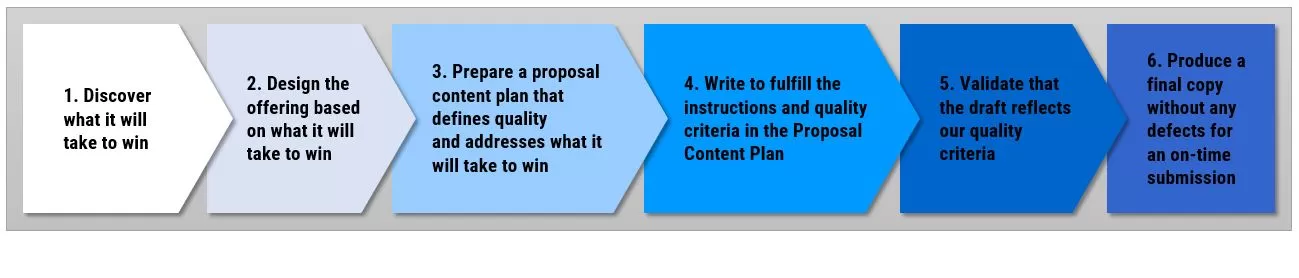 In the same way that the MustWin Performance Support Tool (MWPST) helps you plan, collaborate, validate, inspire, and accelerate the Proposal Content Plan, it can also be used to help implement a goal-driven process by: The MustWin Performance Support Tool shifts the focus from proposal data management and assembly, to creating proposals with meaning. Instructing proposal contributors regarding what is required to achieve each goal Facilitating their ability to ask questions and
- 0 comments
- 1,936 views
-
 Balancing the time to plan with the time to write against a deadline is more of an art than a science. The more you can do to accelerate the planning, the more time there is for writing. But don't forget that you have to think things through. If you rush through content planning without thinking things through, which is what an approach based on recycling proposals leads to, you can do more harm than good. Recycling narratives can also hurt because editing text to change the context can take lon
- 0 comments
- 159 views
-
 This presentation is part of the training materials that go along with the article titled?How to make figuring out what to propose simple. It gives you a slide deck you can use to walk people through the recommendations item by item.
- 0 comments
- 573 views
-
 This book explains why proposals are such a pain and what to do about it. It shows how to get past the fear of a blank page and the best way to accelerate your efforts. It shows you how to get your proposal right on the first draft, without endless review and re-writing cycles. It lays out the sophisticated methodology from the MustWin Process in PropLIBRARY and then shows you how to cheat. It makes it both feasible and realistic to plan your proposal before writing it. It even discusses how the
- 0 comments
- 768 views
